Capabilities
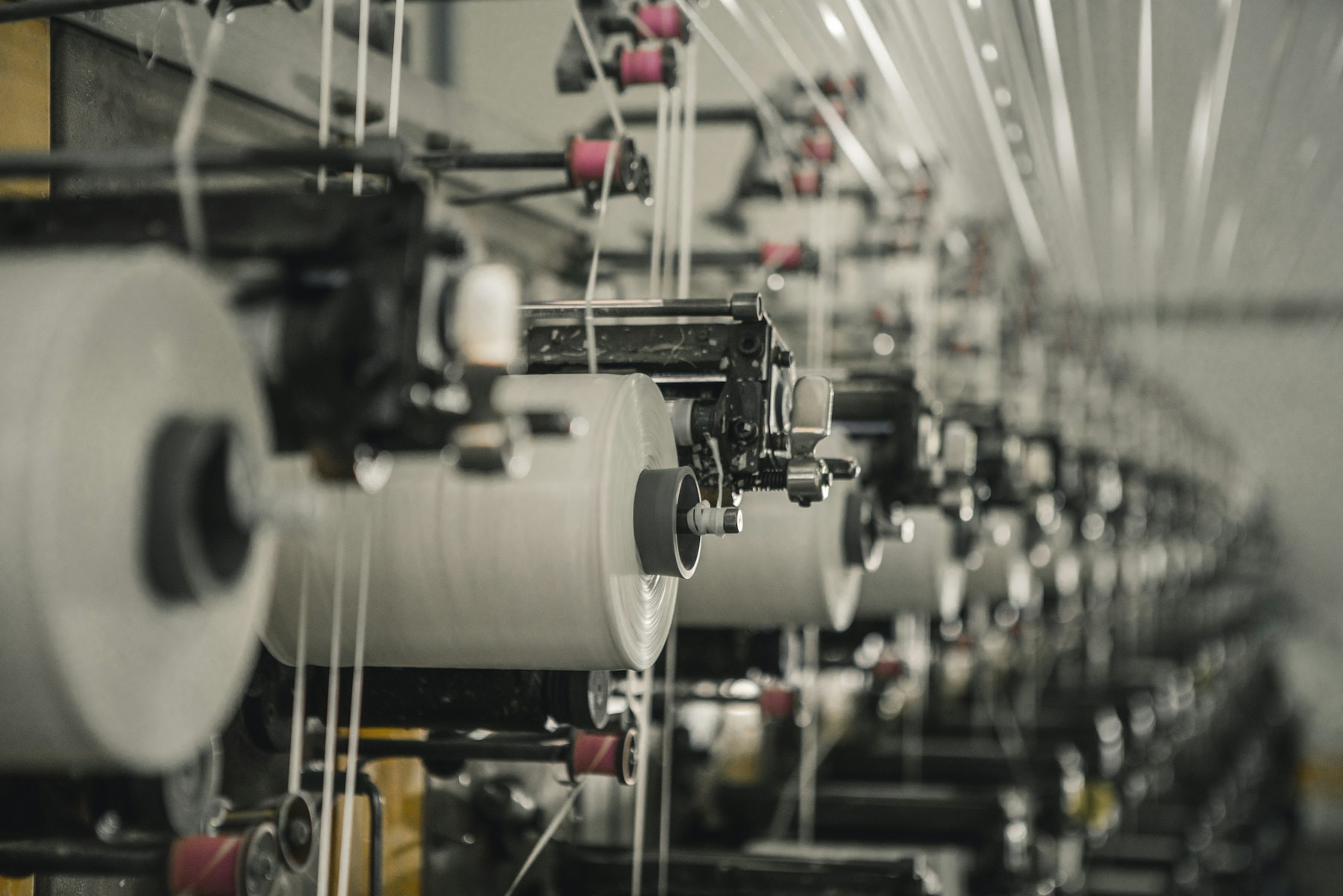
Five parts of one chain. Each is run by people who have done it for years, and each is recorded so the next step can rely on it.
Sizing
Beams that stand up to the loom.
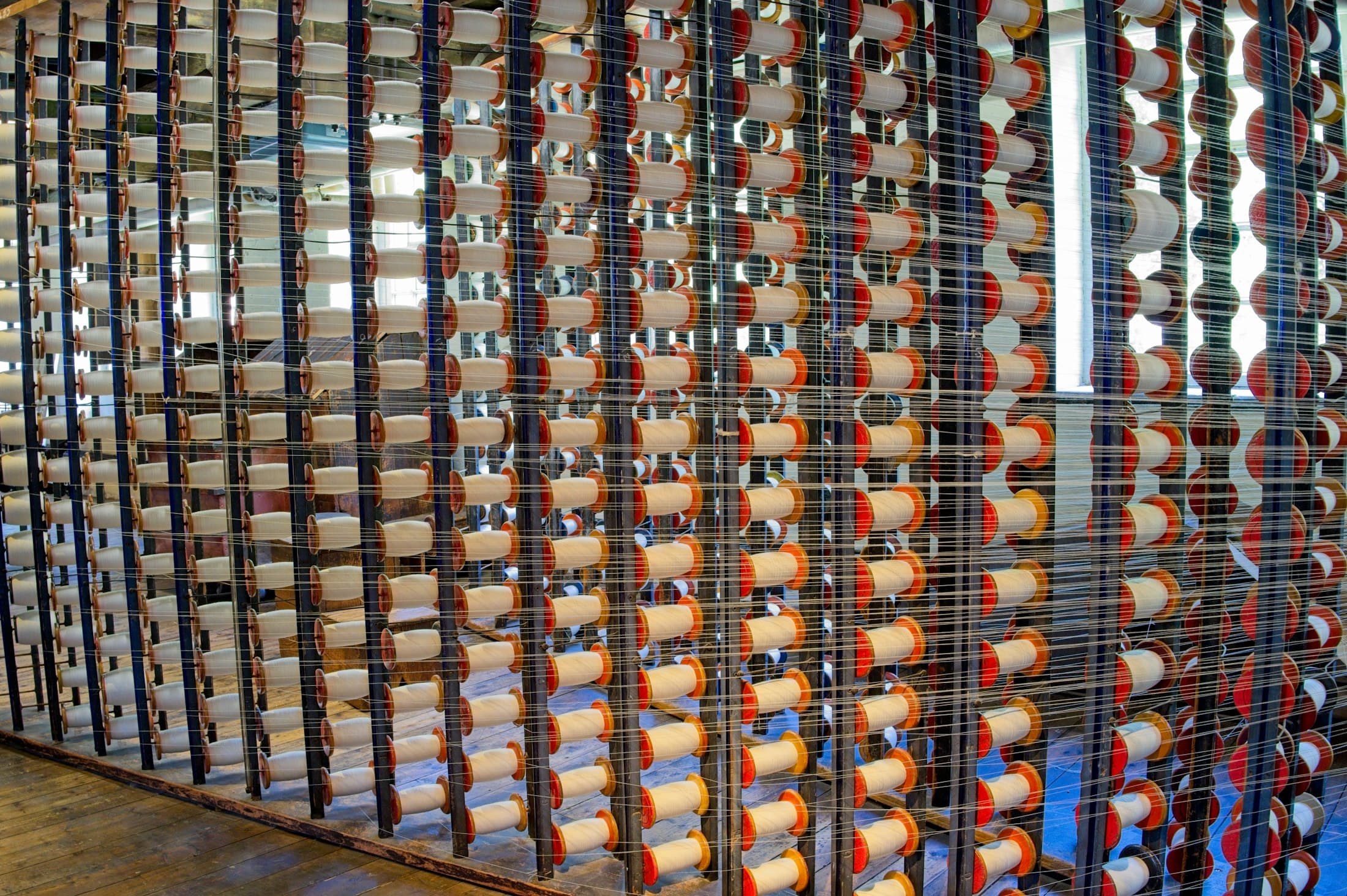
Sizing is where a warp either becomes weavable or does not. Our sizers draw the ends onto the beam and apply size so the yarn can take the abrasion of the reed and the heddles without breaking.
Get the pick-up wrong and the loom stops every few minutes. We book size pick-up against the beam, and the beam against its yarn lot, so a weaving problem can be traced to the beam that caused it.
- Beam
- Ends, length, size pick-up recorded
- Warp
- Drawn to the construction on order
- Custody
- Own yarn, or customer's under job work
Weaving
Construction-wise, across the network.
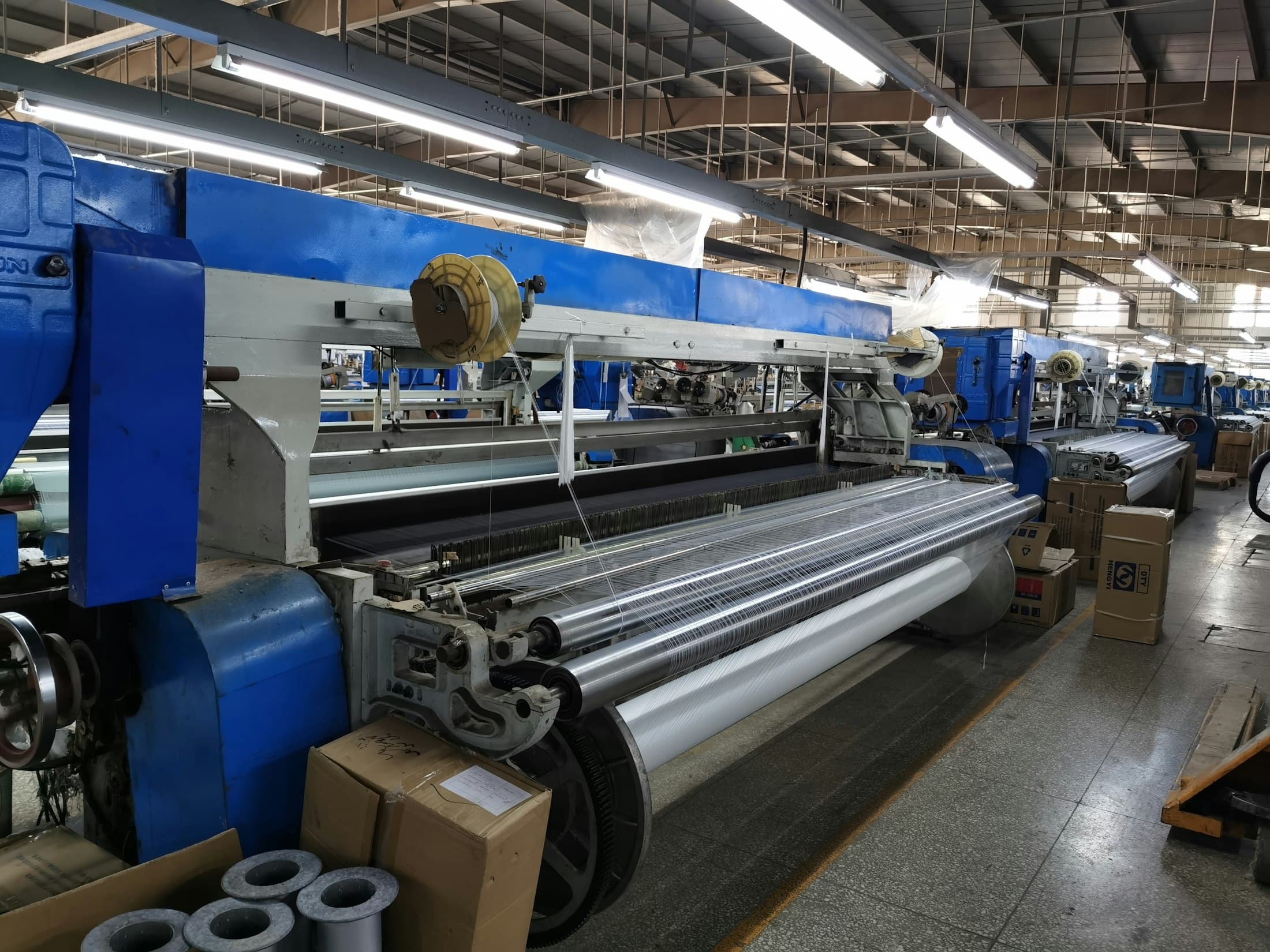
Beams go out to our weavers and run to construction: ends and picks per inch, reed, width. We work across a network of weaving units rather than a single shed, which is what lets us take both small repeat orders and volume.
Cuts come back booked against the beam they were woven from. That is the link that makes the rest of the chain hold — without it, a bale is just cloth with no history.
- Construction
- Ends × picks, reed, width
- Count
- Cotton, blended, man-made
- Booked
- Cuts against the beam

Processing
Dyed and finished, still on our books.
Grey goes out to our processors for dyeing and finishing and comes back ready to sell. The goods never leave our account: processor, shade and lot are all recorded against the same chain.
When a buyer needs a shade matched to something they bought last season, the record is what makes that answerable rather than a guess.
- Recorded
- Processor, shade, lot
- Scope
- Dyeing and finishing
- Input
- Our grey, or buyer's grey

Quality
Checked where faults actually appear.
Cloth is measured and checked as grey — for cuts, lumps, and weaving faults — before it goes anywhere near a processor. Catching a fault at grey costs a good deal less than catching it after dyeing.
Grading is recorded against the piece, so what a buyer is quoted is what a buyer receives.
- Checked for
- Cuts, lumps, length, weaving faults
- Stage
- At grey, before processing
- Recorded
- Grade against the piece
Traceability
Processor → weaver → beam → sizer → yarn lot.
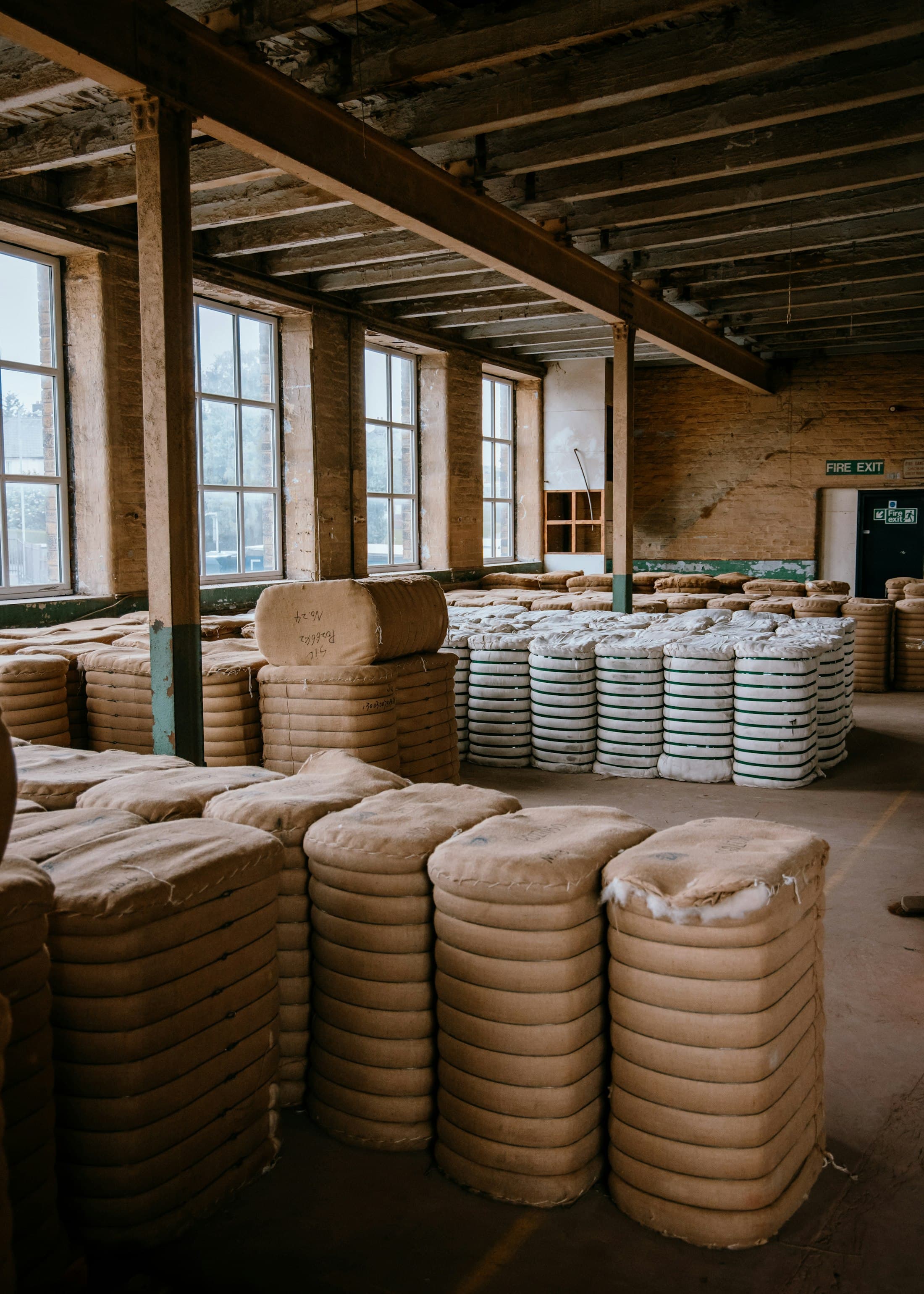
Every bale we ship can be walked backward: to the processor that finished it, the weaver that ran it, the beam it came off, the sizer that drew that beam, and the yarn lot it started as.
Most of the trade cannot do this, because the chain is spread across independent sizers, weavers and processors and nobody holds the whole record. We do, because we built the system that keeps it.
- Unit
- The bale
- Chain
- Five links back to the yarn lot
- Applies to
- Own account and job work alike

Know the construction you need?
Send us ends, picks, reed and width. We will quote it against a beam and tell you what it runs at.